Wednesday, August 18, 2010

California Dreaming along Highway 1

California Dreaming
Coastal Campout Along Highway 1
The Outs- Ellen Jo Roberts
The Noise
September 2010

highway 1

California’s Highway 1 is just a road, just a narrow curving ribbon of macadam perched along the western edge of the USA. It’s also something legendary, lyrical, mythical, magical: from books, magazines, movies and commercials.
A National Scenic Byway, it’s been designated an “All American Road”.
We all dream of Highway 1, as part of our collective consciousness.

My husband and I celebrated our 15th wedding anniversary this summer, a milestone worthy of a special road trip celebration. We wanted to be part of the dream, so we planned a Highway 1 adventure. All year we poured over library books, maps, brochures, Google Earth, and the state park websites, plotting our journey, booking our reservations. For Chad, the planning part is sometimes even more exciting than the trip itself. For months he lay awake in bed at night, satellite imagery dancing in his head.

ellen and chad at mcway falls

We travelled on the cheap, loaded up with camping gear and a picnic basket full of dry goods. Our only “luxury” was renting a Toyota Prius for its excellent fuel economy (averaging 50+ mpg), lower environmental impact, and modern comforts like satellite radio, climate & cruise control. We do all our longer road trips like this. Renting a car conserves both our vintage Volkswagens and our marriage.
The scenic routes Chad chose were both more direct, and more time consuming. After our first 13 hours on the road, we arrived in San Luis Obispo County, in a seaside town called Avila Beach, where we set up our tent after dark, at an area campground. The next morning we were up early, making our first memories of Highway 1, via San Luis Obispo. “SLO” as the locals call it, is hopelessly adorable, chock full of tidy Mediterranean bungalows and well-groomed yards. It’s home to California Polytechnic State University (“Cal Poly”), and the delightfully tacky 1950s “Madonna Inn”, with its outsized pink sign, and crazy gingerbread flourishes.

madonna inn  san luis obispo ca- argus

sea lions on beach near gorda, ca

Highway 1 through the central California coast is one of the rare things that lives up to the hype. You fear a collision from gawking at the scenery. It’s also achingly slow moving, constantly curving, elevating, and bound to cause moments of nausea in even the sturdiest passenger. It is riddled with delightful pull-offs and scenic overlooks. The ocean on a cloudy day is grey, but when the fog lifts the water changes color to an unbelievable turquoise, with tangled forests of kelp floating offshore like vegetable soup.

Big Sur, from “El PaĆ­s Grande Del Sur” (big country to the south), a moniker given by Carmel’s early Spanish settlers, remains fairly remote and sparsely populated. Highway 1 wasn’t completed through the area until 1937, and electricity didn’t arrive until the 1950s. Vast stretches are unpopulated, and the mountainous terrain to the east is Los Padres National Forest. The area is historically wealthy with inspiration for photographers, artists , beatniks, poets, writers, and other free spirits escaping from large cities to the south and north.

McWay Falls from above

"McWay Falls” is an icon of Big Sur, a t-shirt emblem just like the Bixby Bridge further north. Located near Julia Pfeiffer Burns State Park, the waterfall tumbles west of Highway 1 onto a secluded seashore, sheltered in a stone cove. The only creatures on the beach below it were seagulls. It’s off limits to humans, though a boardwalk above allows views of the beautiful scene.


A few hours north on Highway 1, with every mile taking twice as long as we’d planned, we headed east to the quicker 101 to make up some speed to our next destination, San Francisco. It was nearly sunset by the time we arrived in the foggy city by the bay. Even the dreary weather couldn’t dim its loveliness, all vertical and cascading down hills in vintage perfection.

balboa cafe- chocolate polaroid night exposure

Cold in July, with everyone was wearing sweaters, coats and hats, I kept thinking of Mark Twain’s joke :” The coldest winter I ever spent was the summer I spent in San Francisco.” Perhaps it was a culmination of a long day of driving, the maps strewn everywhere in the cramped car, Chad arguing with the GPS lady-- I dunno-- but I burst into tears driving down famously steep Russian Hill. I was so scared!
We’ve driven on some hair-raising mountain roads before, crawling boulders in the wilderness, but nothing has ever frightened me as much as Lombard Street in San Francisco. I’m no “Bullitt”.
There are stoplights at the top of a 45 degree hill. There are points where you cannot see the road above/ below you and you must just have faith there is nothing in your way as the light turns green. And if your car isn’t in great shape- if the engine is weak or the brakes are bad-- you’d better just go home.

lombard street looking down from russian hill

Our San Francisco night was spent at the Motel Capri, an inexpensive mid-century gem located in the Marina District, close walking distance to many interesting street scenes.

Floyd in San Francisco

Time in San Francisco was too short: just a night and part of the next morning-- not nearly enough to soak up this vibrant city. Hiking up the steep streets on a Sunday morning with all of my cameras clattering, I was grooving on the big city life, being just a face in the crowd, one of many. No one batted an eyelash at me (unlike in my own tiny town where I am a featured landmark.) San Francisco is a smart, wealthy city, beloved by many who’ve left their hearts there. The streets are so steep it’s a full-on cardio work out all the time. A friend of mine lived there for 7 years and says, “Try walking up and down those hills every day, yeesh! I ended up in Delaware - flat as a pancake. To paraphrase Tony Bennett ‘I Left My Girlish Figure in San Francisco.’"

lombard street-"the world's crookedest street"

From San Francisco we crossed the Golden Gate Bridge north to Marin County, to have lunch with a dear favorite friend, an Arizona ex-patriot. She and her surfer beau live in a cozy 1910 built "love shack" near the sea in tiny Stinson Beach, and invited us to stay.

Heidi and Michael

We cancelled our camping reservations at Manresa Beach State Park near Santa Cruz in favor of setting up tent in their garden amidst their surfboards, nestled between the fog-shrouded Mt. Tamalpais, “Birthplace of Mountain Biking”, and the cold grey waves of the Pacific.

where we camped- stinson beach

Marin County is notoriously suspicious of outsiders. Nearby Bolinas is famous for removing their city sign, to discourage tourists. Hanging with the locals we were instantly accepted as locals by proxy. Romping and running wild with our dogs on the beach was a thing of pure joy. Our friends cooked us a wonderful dinner, we drank wine, laughed, and told stories well after dark. It was a highlight of our trip and finally felt like the vacation had begun.

beach dogs- stinson beach 2

Highway 1 north of San Francisco is fragrant with eucalyptus. The giant groves of quick growing Australian trees are not native, and have their detractors for this reason. Despite this, the willowy giants have somehow become synonymous with California. The gold rush and railroads brought the species here in the 1850s, when the state government authorized and encouraged their quick growing establishment. The astringent smell of the eucalyptus fills our noses.
Suddenly we are in love with this part of California. My mind wanders back to the beautiful eucalyptus tree we already have, in our own Arizona front yard.

heidi moved from SF to Stinson Beach

Our next campsite was back down the coast at San Simeon State Park, followed by a night at Pfeiffer Big Sur State Park. We’d reserved all of our campsites months earlier, most of them at state parks for about $40 per night.
Pfeiffer Big Sur, a popular park since 1933, is a bit magical, nestled into the redwoods, and delineated by the clear grey green Big Sur River. There were swarms of ladybugs everywhere when we arrived. I wouldn’t have been surprised at all to see a unicorn.

pfeiffer big sur redwoods

Side note: They sell beer (!) at California State Parks. (Hey Arizona State Parks, ya’ listening?) After setting up tent it’s customary to take a dip in the Big Sur River. Hot, sunny, drinking beer in the river—just like home.

chad in big sur river 2

Chad led us on a sunset expedition to nearby Pfeiffer Beach. Amazing, framed by giant sea bound monoliths, and smooth purple sand, Pfeiffer Beach was blustery cold, full of photographers, picnickers sipping red wine, unruly dogs, and loud crashing waves.

pfeiffer beach at sunset- july 14th

Our final night on the Big Sur Coast was spent at Kirk Creek, a federal campground. There are world-class resorts all up and down Big Sur, each charging hundreds of dollars a night. None would compare to this $22.00 campsite. When we arrived, our jaws dropped. Site #11 at Kirk Creek was the best campsite we've ever had in our lives: big, beautiful, carpeted by soft grass, high on a bluff overlooking the sunny Pacific, surrounded by sweet scented wild fennel, sage, and yarrow. A steep trail leads down to the rocky shore below.

kirk creek dinner

fennel growing wild and smelling good

north of sand dollar beach 3

black tan green

Unpacking, setting up, breaking down, and repacking camp every day was hard work. The Prius was so small we basically had to unload the entire car, and reload the entire car every day. Thank God for Chad's engineering-style mind. The camping life is hard work, toting water, lifting gear, washing dishes outdoors, washing our hair in sinks—everything takes more time and energy.
And somehow, the food tastes better. The sleep in the tent is more restful.
The hard work makes everything more valuable somehow.

kirk creek trail begins at campground

kirk creek beach 7- 15 setting sun

highway 1 at night- long exposure

Without showers for days, we were kinda’ grungey, with our rock star hair and dirty feet like a couple of goddamn hippies. It didn’t bother me at all, until we took the dogs for a stroll through a field of tall dried thistle, just north of nearby Sand Dollar Beach. Headed to a special seashore Chad selected, I looked down at the dogs and noticed little dark dots all over them. Yanking my chihuahua up by his harness, my fears were confirmed. Ticks! The dogs are covered with ticks!! Panic sets in and a shriek wells in my throat. I start brushing them off of him frantically, brushing them off my bare legs, and looking for the nearest exit. Sitting on a barren bluff, high above the rocky beach, socked in with raging high tide, I managed to clear all the ticks off of Floyd, because they are easy to spot in his pale fur. Ivan, the Boston Terrier was not as lucky. We manage to find most of them in his dark brindley fur, but miss the final two until the next day.
That night I feel itchy all over, and wish for a shower.

north of sand dollar beach

north of sand dollar beach- scared protecting floyd from ticks

chicken dinners- broken neon

Away from the sea and back to the desert, we spent a night at a 1950s built motel in Palm Springs. San Francisco in July is cold enough for polar fleece. Palm Springs in July is like a blast furnace. It was still over 100 degrees when we rolled into town at 9pm, and already back up to 109 by 9am the next day.
Travel tip: Palm Springs motel rooms are cheap in July.

palm springs travel lodge

"Salvation Mountain", about 75 miles from the Coachella Valley in a remote sun-baked location near Niland, has been on my list of places to see for years. Our last day on the road, we head a lil’ bit out of our way down to see this amazing bit of folk art. The Colorado Desert sits below sea level, and is sparsely occupied during the summer. Bombay Beach along the Salton Sea is a 1960s resort town gone wrong, a post-apocalyptic paradise full of bombed out trailers and land locked boats.

bombay beach grounded boat

Further south is “the last free place”, Slab City, a transient community setting up camp on concrete slabs left behind from a World War 2 military installation.

slab city- the last free place

We arrive at Salvation Mountain, a massive bit of crazily colorful religious folk art created by Leonard Knight. Mr. Knight, 78, has spent decades carving and coating the side of a dirt hill with adobe, straw, thousands of gallons of donated paint, and various versions of “God is Love”, scripture, and testimony to Jesus.

salvation mountain-artist's chair and supplies

sun baked bible truck

Everything is fancifully painted: cars, trucks, bikes, boats. 113 degrees at high noon. I thought my Chuck Taylors might melt. Salvation Mountain was worth the many out-of-the-way miles. It is a true thing of beauty, and as important to American iconography as Highway 1.

for god so loved the world

Driving through the heat of day, we arrive back in our neighborhood by dusk.
The Verde Valley always looks really good after a long road trip, after driving through many random small towns of assorted quality.
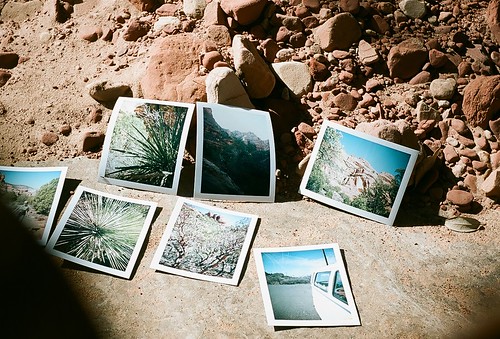
“You know something, this place we live in is pretty damn good. It looks pretty great here.” Back at home we feel exhilarated, relaxed, as we pour over Polaroids, tip back cold California beers, and sit close to the eucalyptus tree.


http://www.madonnainn.com/index.php
http://www.sfmotelcapri.com/
http://www.parks.ca.gov/
http://bigsurcalifornia.org/
http://www.salvationmountain.us/

Ellen Jo Roberts lives in a historic brick bungalow in Clarkdale Arizona, with Bike Daddy Chad, 2 small dogs, a cat, and a collection of vintage Volkswagens, none of which have cruise control, air conditioning or satellite radio.
Read all about it at ellenjo.com

Tuesday, July 27, 2010

The Clark Mansion Fire

The Clark Mansion Fire
A Mysterious Tale of Wealth, Decay, and Haints
The Outs
Ellen Jo Roberts
August 2010

clark mansion-tiltshift

“The beauty of that jewel in the desert, a relic of Clarkdale's youth, fueled creativity and imagination. I always wished I could see inside and wondered what it was like to live there when it was new.” – Clarkdale resident, artist Sandy Boothe.

The Clark Mansion has been a town landmark since the late 1920s, created in Spanish-Revival style in the native colors of the surrounding desert, and flanked by two towering Italian Cypress. Originally built for William A Clark’s grandson, United Verde Copper Company heir, William Clark III, the house has lived many incarnations since young Clark’s unfortunate death in a nearby plane crash in 1932. During the last part of the 20th century, the 7 bedroom 5 bathroom mansion was leased for residential use, and also utilized as an auxiliary clubhouse and restaurant for the Peck’s Lake golf course. It had been used as a movie set several times, though no one can remember the titles of any of the films.

Over the past 15 years, Peck’s Lake has been in a state of decay mirroring that of the mansion. Once a vibrant part of Clarkdale’s company town amenities, Peck’s Lake was regionally famous for its dance pavilion, fireworks, town picnic, golf course, boat races, and other sporting events. The golf course closed in 1991. The dance pavilion burnt down, and the main clubhouse was vandalized (apparently by horny teens, and satan worshippers from the looks of the graffiti), a hollow shell of its former glory.
By the mid-1990s, the mansion was vacant and the windows boarded up. On January 1st 2004, Phelps Dodge closed off all public access to Peck’s Lake, blocking the road with an earthen dam, and wrapping the entire area, including the mansion, in barbed-wire-topped chain link fencing.

clark mansion 1999

Even in its lonely neglected condition, separated from all of us, sealed off and empty, there remained something majestic about the Clark Mansion. It watched over us all from the edge of town. It glowed in the sunset, and fired up our inspiration. I made paintings and took photos of it. I called it My Dream House and imagined how I would fix it up should it ever miraculously be mine.

clark mansion painting, c. 2002

My friend and fellow Clarkdalian Brandi Lee Cooper said it was haunted--that a “haint” lived out there. Maybe it was dangerous to run past it after dark, and tempt the haint’s wickedness. My fear escalated as Brandi Lee told me the plane crash that claimed young Clark’s life took place in front of his wife’s very eyes, as she watched from the mansion in horror.

Snow day in Clarkdale Arizona

During the pre-dawn hours on June 25th 2010 a new horror happened at the Clark Mansion. Something terrible. Just after 4 in the morning, the mansion, haunted by haints and guarded by cypress, inexplicably began to burn. Quickly the fire grew out of control, with flames hundreds of feet high, according to witnesses, brightly visible from as far away as Jerome. Many called to report the blaze, though by the time the fire crews arrived, a power line had fallen onto the metal fence surrounding the mansion, electrifying it. Unable to spray any water until the electricity was cut, crews had to wait 20 helpless minutes for APS to arrive. The roof, interior walls and floors of the mansion collapsed in the fire, leaving just the heavy concrete exterior walls. According to Paul Peck of the Clarkdale Historical Society, the fire burnt so hot it severely damaged and cracked the remaining walls.

clark mansion and garage 6- 25-10

Like many locals, I slept through all of this, blissfully unawares. It wasn’t until I arrived at work a few hours later, the flames finally extinguished and the mansion still smoldering, that someone alerted me about what had happened, “The Clark Mansion burnt.” Immediately I ran outside to see for my own eyes what couldn’t possibly be true. At first I couldn’t even spot it. Without its red clay tile roof and sentinel cypress trees, it had become invisible, blending in with the color of the nearby earth. Then I saw the wisps of smoke still rising. The Italian Cypress had perished in the blaze (witnesses reporter hearing them “explode”). I burst into messy sobs. How could this be? Who could have been so evil to destroy this precious bit of Arizona history? My dream house! Perished!

lonely clark mansion

Marsha Foutz, an artist and educator, has lived in her historic lower Clarkdale bungalow for 29 years. She included her home in Clarkdale’s first Home Tour specifically to highlight and educate about Clark Mansion by sharing her especially great view of it.
“During the many renovations to my home, I have always kept the view open and focused to the mansion. My studio was built to take in the view of the mansion as much as possible,” says Ms. Foutz, “From my house, I view the mansion many times a day. I have recently discovered that I used to ‘greet’ the mansion each time I saw it. I still get stunned and saddened 10 to 12 times a day as when I look up, there is nobody to greet!”

8 18 10 clark mansion side

She’s always had hopes that the building would be restored. At the time of the fire, the mansion and its surrounding property was in the negotiations between current owner Freeport McMoRan, and local developers Verde Exploration.
Verde Exploration (UVX) reps confirm they had plans to eventually restore the mansion for commercial use. According to Clarkdale mayor, Doug Von Gausig, “Freeport-McMoRan was in the process of trading the building and 5 acres, as I recall, around it for some land that Verde Exploration owns adjacent to the Freeport land near Jerome. The deal would have been finalized about 30 days after the fire.”
This compounds the tragedy. Ms. Foutz adds, “Ironic that it was just going to a group that might have restored it… I've always heard that there were proposals to acquire and use it. The UVX trade might have made a difference in a few weeks. Too little too late for our friend.”

clark mansion- front view -horizontal

Mayor Von Gausig dedicated a recent town meeting to discussing the Clark Mansion, and initiated a resolution to encourage its restoration if at all possible. After all, the Old Town Theater, gutted by a 1998 fire, was able to be salvaged, restored and reopened after several years of renovation as the popular Tavern Grille. Perhaps there is also hope the Clark Mansion may be restored to something even better than its former glory.
“Has the fire been confirmed arson?” I ask.
“We don't know the answer yet,” answers Mayor Von Gausig, “The owner has engaged a structural engineer to assess the condition of the remaining parts of the building, but that assessment hasn't been made yet.” Fire inspectors have been unable to adequately access or assess the structure, due to its current instability. Initial inspection was done using Sedona Fire Department ladder trucks to view interior from the outside. The cause of the fire is confirmed to be of a “suspicious” nature.
“What's the next step?”
“Get the structural report. Then it's up to Freeport-McMoRan to decide what to do with the property,” said Mayor Von Gausig. “The town is on record with a resolution asking that they consider every possible alternative to demolition of the building.”

“NOW THEREFORE, BE IT RESOLVED that the Mayor, Common Council, and citizens of the Town of Clarkdale, Yavapai County, Arizona strongly urge the owners of the Clark Mansion and all other regulatory, public safety, legal and proprietary interests in the property to take no action that may preclude the possibility of restoring, renovating, or rebuilding the Mansion to its historic form and functionality without first exhausting all possible avenues that may preserve the building in as close to its former condition as possible” – from Resolution 1339, passed July 13th 2010.

front of clark mansion- through fence

“Years of indifference piled upon years of neglect and you get what happened,” said Chris Boothe, another long time resident of Clarkdale, “Yet, like the pyramids, we all wanted it to always be there, the icon, the sentinel, the soul of Clarkdale. I attended the Town Council meeting to support restoring what's left of the [Clark Mansion] but left dismayed to hear it's nothing more than a suggestion to Freeport McMoran. The bleak truth is that the company can raze what's left at any time. Perhaps with enough input from the public they will realize the importance of keeping a bit of Clarkdale DNA.”

Gerhard Mayer, is the CEO of MGL Development LLC, a solar system manufacturer and construction company based in Sedona. He’s lived and worked in the Verde Valley for almost 30 years, and used to golf at the Peck’s Lake course. At the July 13th town meeting, Mr. Mayer spoke passionately in favor of any preservation efforts for the remaining structure of the Clark Mansion.
“We are all stewards of our history and need to preserve our heritage respectfully for all future generations to build on. The Clark Mansion’s destiny was predictable, a building, not the most impressive one of all of Clark`s mansions, but a landmark for the Verde Valley, neglected, unoccupied, vandalized, torched by an arsonist and now facing the ultimate sentence, leveled, rubble for a landfill, erased, history wiped out.”
“We all have an obligation, the owner who neglected the mansion for decades, the city and citizens of the Verde Valley to stop this from happening. When I drive up 89A to Jerome and see a building along the highway being brought back to life from a near rubble, crumbling state, then I think this could be possible for this blackened historic jewel as well.” Mr. Mayer acknowledges such an undertaking would be expensive.
“It will not be cheap, but copper has reached $ 3.18 a pound. Freeport just announced that they are activating some of the dormant mines, the shares are traded at $ 66.06… It should be in the best interest of Freeport to have this mansion restored. What a great PR and image enhancing action.”

Perhaps Ms. Foutz speaks for many locals in calling the mansion fire “a death”.
“A senseless murder most likely. I am much more sad for this death than for the death of my father. My father was cared for. This home was abandoned. And so lonely! Its only friends were the cypress trees and now they are gone too. It was so loved and yet was so isolated!”
I was inconsolable for days after the fire. Even now, a full month later, all the air escapes from my lungs whenever I catch a glimpse of the Clark Mansion’s burnt hulk.
A ghost at the edge of town, a haint lingering in its crooked shadows.

triple clarkdale

If you’d like to lend your support by word or deed in favor of saving the Clark Mansion, please contact the Town of Clarkdale for more information.www.clarkdale.az.us

For photos of the Clark Mansion Fire
visit Doug Von Gausig’s Critical Eye photography site at
http://www.criticaleyephoto.com/Other/Clark-Mansion-Fire-6-25-2010/12691510_rfY89

Ellen Jo Roberts has a keen interest in vintage architecture, because she wakes up in a historic Clarkdale Arizona bungalow every morning. She also likes other assorted old stuff like neon road signs, air-cooled Volkswagens, cassette tapes, and antique cameras. Read all about it at www.ellenjo.com

Wednesday, June 23, 2010

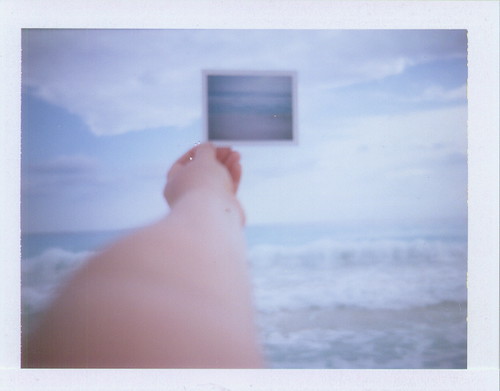
Instant Gratification: Momma, Don't Take My Polaroid Away


Instant Gratification:
Momma, Don't Take My Polaroid Away
The Noise- July 2010
The Outs
by Ellen Jo Roberts


Don’t undertake a project unless it is manifestly important and nearly impossible.”
- Edwin Land


"The world is a terrible place without Polaroid."- John Waters


It seems incredibly unlikely. In fact, it seems darn near impossible!
How is it in the year 2010, the second decade into our 21st century digital age of instant communication, smart phones, status updates, tweets, and viral videos, that any attention would be paid to something so distinctly 20th century as instant film? Instant film is like TV dinners, or remote control: harkening back to our earliest notions of a speedier future world, in a quaint 1950s sorta’ way, like the Jetsons. Polaroid was imploding, hemorrhaging 25% a year in profits, when it slowly ceased production of all varieties of instant film in the 2000s.
How has it suddenly become the fresh hot new image-maker? Ironically, it’s due to an internet community of artists, hipsters and analog buffs that instant film is being resuscitated from near death.

Edwin Land was an American inventor born under the sign of Taurus in 1909. He first gained success and created the Polaroid brand by inventing polarizing filters for sunglasses and camera lens. He developed his eponymous Land Camera in 1947. Polaroid initially underestimated how popular the camera would be. When first offered at a Boston department store during the 1948 Christmas shopping season, all 57 Land Cameras in stock sold out in one day. Though Edwin Land, a complicated and stubborn genius, invented all sorts of amazing optical gear for the government, he considered the development of SX-70 film and camera to be his crowning achievement.


An explanation of “instant film”: It contains all of the chemicals and components needed to develop, fix, and print an image. Unlike standard 35mm film, which requires a complex series of external procedures to create an image negative and print, the instant photo developed itself, without use of a dark room, enlarger or vats of chemicals. Nowadays when every camera and every cell phone shows you your image instantly, it may be hard to imagine what’s the big deal.
In 1948 this was huge, and it remained a great novelty for about 50 years.
Generally speaking, the image quality of instant film is not as richly detailed as a 35mm image, or that of the much larger medium format negative. Rather than crisp detail it casts glowy nuances. The instantaneous of the print proved to be helpful in various applications. Police found it useful in documenting investigations and making mugshots. Similarly, instant photos were ideal for passports, drivers licenses, and identification. Hollywood utilized Polaroid for checking lighting, and continuity of costume. Artists took hold of the medium. Andy Warhol was perhaps one of Polaroid’s biggest fans, using their “Big Shot” portrait camera to capture images he would later turn into silkscreen portraiture of New York night life.

The number one factor in Polaroid’s success? It was just plain fun, to have that photo develop in your hand at the party. Your iPhone might show you your photos as you take them-- but are they something real in your hand, or simply an electronic stew of code in a format that will also one day no longer exist?


Fred Slavitter is a friendly retired fellow from Needham, Massachusetts. A graduate of Rensselaer Polytechnic Institute, he worked for Polaroid from 1969 until 1995 as New Products Development Engineering Manager, supervising development engineers and creating new photographic devices. Mr. Slavitter holds 10 patents on various items of photographic equipment, including an SX-70 lens. He drove his family bananas always testing new camera products on them. “Instant cameras provided instant photographic gratification. They provided instant enjoyment at special events, parties, picnics, etc., and gave assurance that you got the picture you wanted or gave you the opportunity to take a second picture.” Mr. Slavitter feels Polaroid’s heyday took place from the mid-1960s through the mid-1970s, faltering by the 1980s.“This was due to Polaroid not investing enough in improving their instant film. Fuji came out with a better film.”

There are two basic varieties of instant film —the peel apart type, and the integral type. Peel apart came first, but integral film may be the kind most are familiar with, “shaking it like a Polaroid picture”. Integral film spits out of the camera with a click and a whirr, no muss no fuss, fully sealed, and just a moment or two for the image to take shape. First developed for the SX-70 Land Camera in 1972, integral film was produced by Polaroid up until 2006. Since 2006 there has been no alternative available, and SX-70s around the globe sat dormant, discarded, abandoned…until now. Film is available again via “The Impossible Project”, a New York City company that is slowly reviving assorted instant film products. In March of 2010, The Impossible Project, founded by Florian Kaps, began selling brand new experimental instant film, after purchasing an old Polaroid factory in the Netherlands.

Their first test batch of “PX 100”, while dreamy and strange, suffered from various problems: leaky emulsion, unfolding edges. These issues have since been corrected, and the company strives to create a whole new generation of unpredictably spirited instant film. It was quite something to unfold my dusty 1970s SX-70 and hear it whirr back to life when I put the first pack of Impossible Project film into it. This new generation of instant integral film ain’t cheap, running $3-4 per shot. Makes you really contemplate what you are photographing.


David Bias, the Vice President of The Impossible America Corporation, explains the inspiration behind their venture, “We all know that when the mainstream goes one direction, there are always those who search for other things. A growing portion of these ‘others’ have a healthy respect for physical things - things made out of artistic ambition or simple handcrafted love. The inspiration for The Impossible Project is Edwin Land, plain and simple. Instant film photography is the best of both worlds - the immediacy we love about digital, along with the organic warmth of film.”

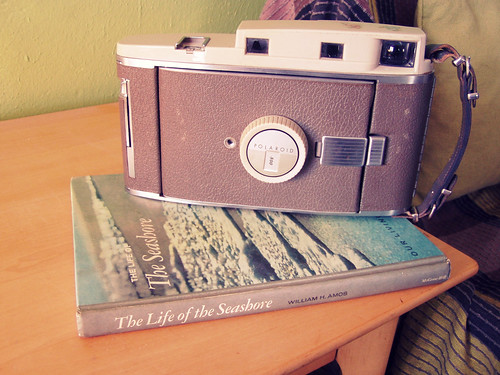
I’m a fan of Polaroid type 100 cameras, the kind that use peel-apart or “pack” film.
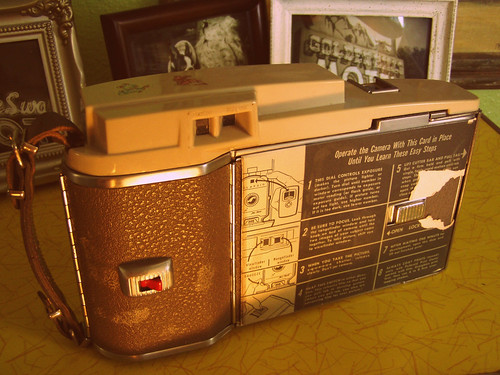
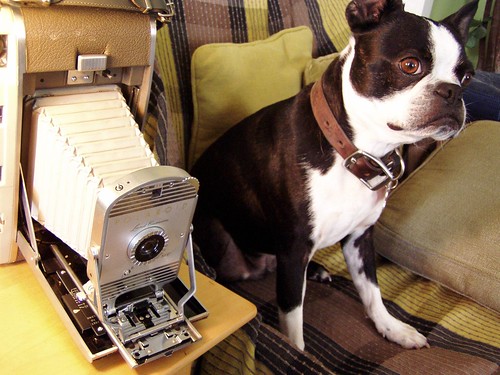
The peel-apart variety dates back to 1963, supplanting the first generation of roll film, which was far more complicated and fussy. I have a big beautiful roll-film camera dating from the 1950s. It’s huge like a piece of furniture, or a Buick, and it pops open like a parade float. Polaroid buffs have converted these old roll film cameras to pack film, but I’m a poor engineer and prefer my cameras ready-made.


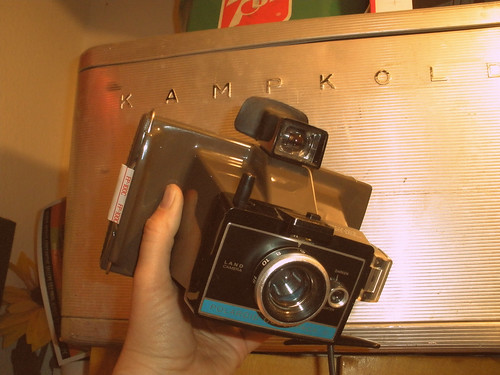
My favorites are from the clunky-looking “Colorpack” series (c.late ‘60s-early ‘70s).
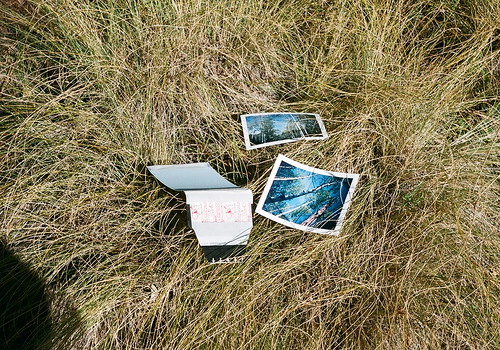
Pack film requires a short series of procedures to get your photo. Unlike integral film, which spits self-propelled out of the camera, pack film needs to be pulled out from the camera, via paper tabs. Rollers crush the chemicals in between a negative and photo paper. After about 90 exciting seconds, the negative is peeled back, revealing the finished print. The negative is then discarded-- though many artists prefer to scan and manipulate the negative rather than the paper print. It is the peel-apart variety that artists use for Polaroid transfers, and emulsion lifts. Roll film operated on the same principal, but utilized 2 separate rolls that met in the middle- one photographic paper, and one with negative and processing chemicals. It was discontinued in 1992.


Polaroid’s pack film production ceased in 2008, but Fuji-Film of Japan has continuously produced peel-apart film since 1981, thus keeping Type 100 Polaroid cameras active. I avidly consume Fuji’s FP100C (color) and FP100B (black and white) films. I devour them like candy. It cannot be found at the grocery store, but can be ordered online with ease, from Freestyle in L.A., or B & H in New York City.

Fuji instant film averages about $11.00-$12.00 for a film pack of 10 images, so at over a dollar a shot they’re not completely beyond budget, but they do exceed the 30 cent per photo processing for 35mm shots. And it’s all far more costly than digital. Digital photography is essentially free once you’ve purchased the equipment and the software, hence its stronghold and vast popularity.

Everyone knows I am a hardcore analog snob. The reason I shoot film nearly exclusively (besides the staunch belief the quality is better and the results more interesting), is that the costliness makes it something precious, and therefore encourages better photography. Unlike digital images, in which one prize-winner can be culled from a hundred similar variations, analog photography requires more thought prior to the shot, rather than excessive editing, deleting, and post-production afterwards. Shooting on film also allows for a bit of happy accident magic that digital does not. There’s a level of unpredictability and magic. Double exposures, accidentally or on purpose. Strange lights and colors you don’t see ‘til long after. Digital encourages fidgeting with the gadgetry. With film you just have to wait and see.


Michael Raso is a photographer, and the owner of New Jersey’s Pop Cinema Studios. He’s also the producer of the “Film Photography Podcast”. Mr. Raso is always generous with his enthusiasm and knowledge of analog photography, “Digital photography is a great advance in technology but not an alternative for the chemical process of photography. It’s all personal choice and I choose film as my medium. Chemical manipulation, image transfers and emulsion lifts give me so many opportunities to make each image its own work of art. I love it. Polaroid instant film has a quality and esthetic like no other. A Polaroid image has a color palette as unique as, let’s say, a Kodachrome slide. Simply original. Whether the integral SX-70 type or the amazing --as I call it-- ‘crack and peel’ 100 type film – the retirement of Polaroid films created a huge outcry from artists around the world. Photographers want the film.”


Justin Craigen is a UK born graphic designer working in Ames, Iowa.
“I love instant film because it allows for a wonderful break from digital photography, which is part of my work as a designer. It's nice to have a unique physical object to handle rather than a bunch of 1s and 0s on a screen that's not good for viewers' eyes…There are also the qualities of color, and sharpness that are unique to the films. People go to some lengths to fake those qualities digitally, but as of yet I haven't seen a single effort that actually does it even half-arsed well.”

Sean Rohde is a Phoenix-based Polaroid whiz, working desert-baked magic on expired films. He writes all about his extensive efforts and instant film adventures on a fascinating blog called Moominsean. “Digital cannot match the qualities of instant film. You may be able to make an effort to replicate instant film on a computer, but there is something special about a product that does these things on it's own without digital trickery,” Mr. Rohde says. “The Impossible Project? I think it's great that there is enough interest to support such a venture, and there are people willing to go the extra mile to make it happen!”

“Why do people seek out instant film is this digital age we live in?” I asked my panel of experts and instant film enthusiasts.

“The same reason people seek out things that are difficult, rare or temporary, because it’s worth it. The same way we love and celebrate the brief blooms of the cherry tree, or stare with breathless joy at the view from the mountain we climbed, so it is with Polaroid. It’s special because it’s not everywhere. Digital is all around us and we are a bit desensitized to it,” says Ashley Russell, a media artist from Vancouver, British Columbia, “Polaroid is like a magic lens that reveals the beauty in everything. Looking at the world through Polaroids makes one realize how much beauty this world holds.”

I am rich in Polaroid cameras. People give them to me all the time. The digital age has benefited me big, with folks passing me off all of their old analog gear, including a complete darkroom set up. You probably think owning a Polaroid camera is like owning a VCR or a pet dodo bird. It’s something extinct, displaced by more modern creatures. But I see the film culture as something akin to the survival of albums on vinyl, kept alive by a select group of aficionados. I see the Polaroid as some type of fantastic time machine, translating this sharp-edged modern world into something of a softer vintage. Perhaps now too you’ll see the value, and walk a bit slower through the gadget aisle at your local thrift shop.


For more information:
http://www.blogger.com/www.theimpossibleproject.com
http://www.filmphotographypodcast.com/


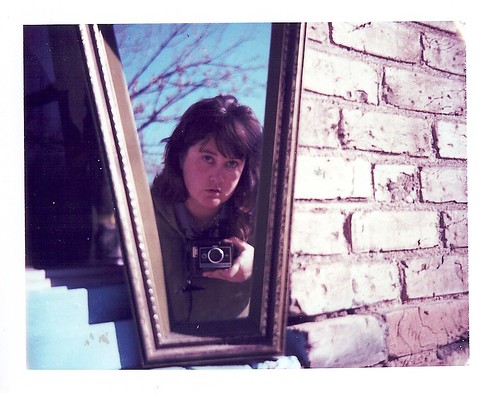
Ellen Jo Roberts will probably take your picture, if she hasn’t already.
She lived in a vintage bungalow in Clarkdale Arizona with her oft-photographed spouse, pets, and Volkswagens. Read all about it at
http://www.ellenjo.com/